Two Cenotes and a Table in the Yucatán
A morning underground in Abalá, an afternoon at a table that wasn’t mine, and what the water asked me to slow down for.
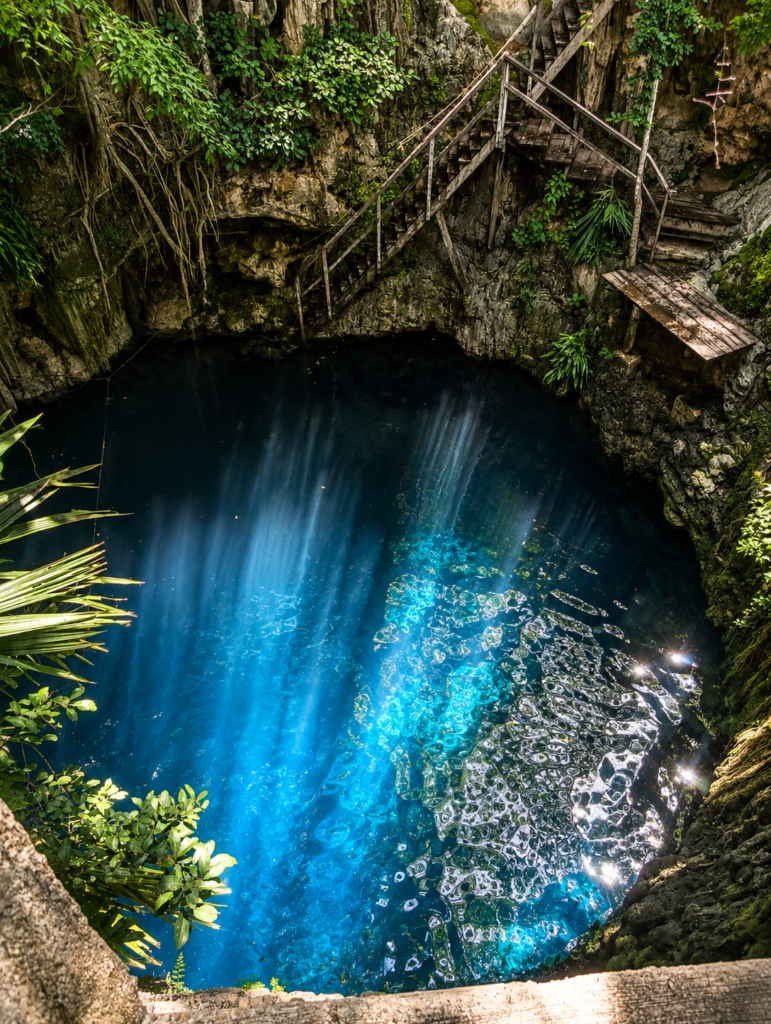
You climb down to a cenote before you ever see it. The stairs go first into shade, then into stone, then into a cool that has nothing to do with the morning you left at the top. By the time the water appears, and the first of the two cenotes near Mérida I met today appeared all at once, a shaft of impossible blue waiting at the bottom of the earth, my body had already gone quiet. I hadn’t asked it to. The descent does that on its own.
I came to Abalá, a small municipality south of Mérida, for exactly this and I still wasn’t ready for it. There is a particular silence that only exists underground, and I spent this morning inside it twice.
You meet a cenote; you don’t visit one
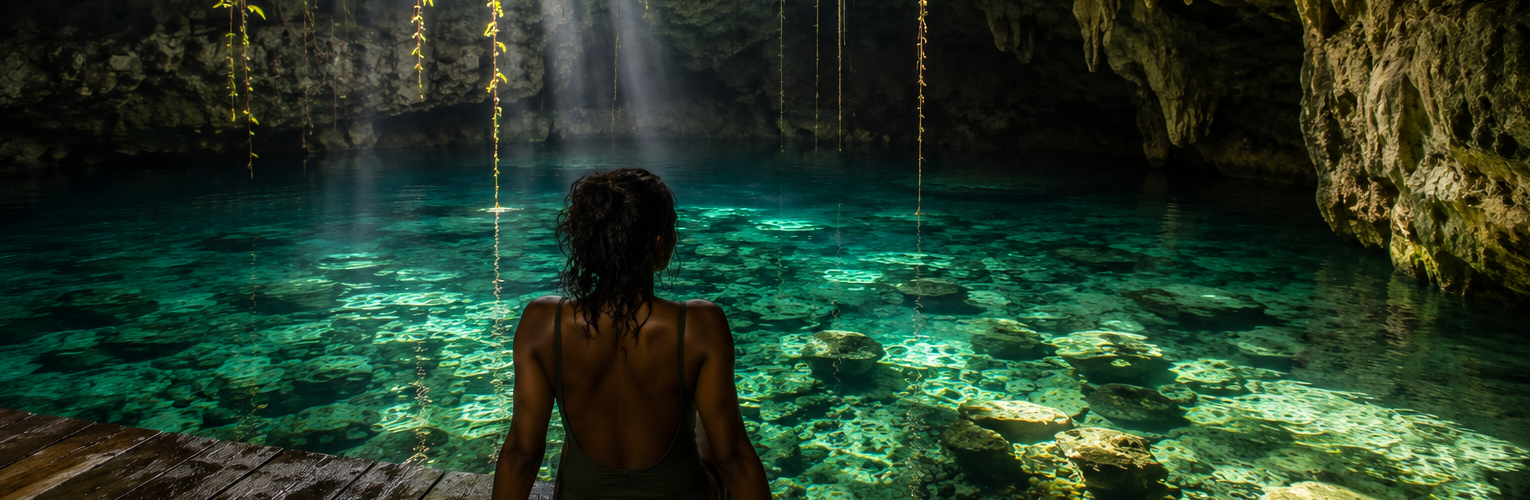
The first was Kankirixché. Roots thread down through an opening in the rock, reaching for water so clear it stops feeling like swimming and starts feeling like being held. Light comes in one honest column and lands on the surface, and everything below it turns the kind of blue you don’t believe until you are floating in it. I floated longer than I meant to. That is the whole trick of the place, it makes staying feel like the only reasonable thing to do.
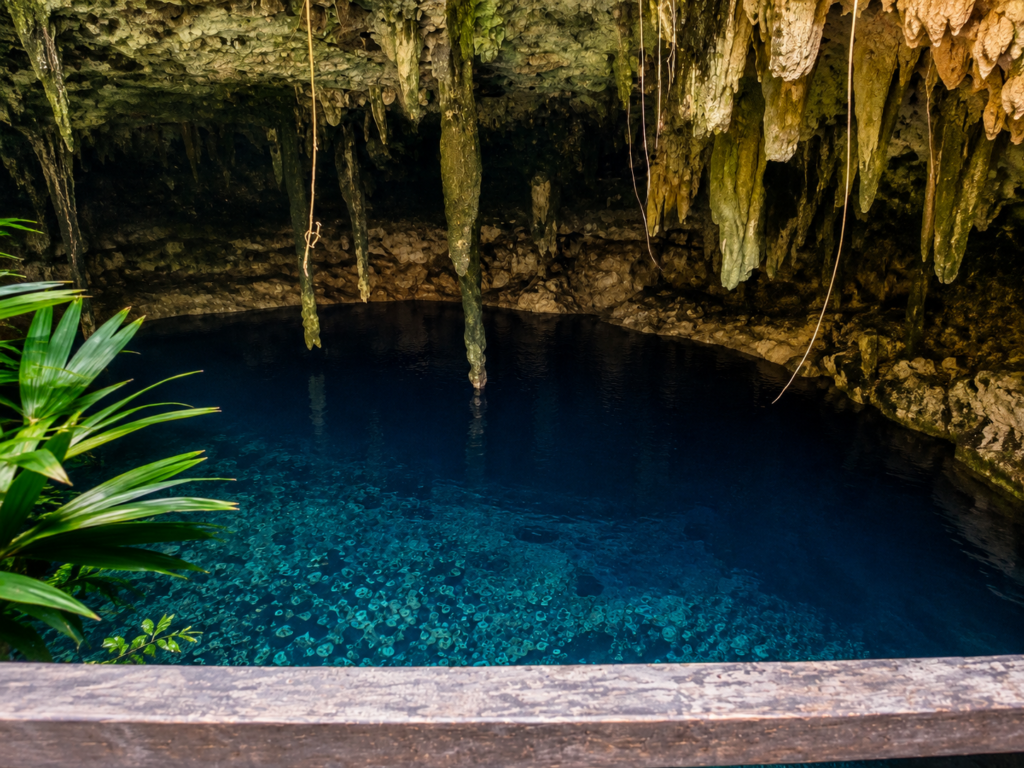
The second, Yaal Utzil, over near Mucuyché, had an entirely different temperament. Deeper. More private. The kind of quiet that asks you to lower your voice without anyone telling you to. That is the thing nobody warns you about cenotes: they are not interchangeable. Each one has a mood, a light, a way of receiving you. You do not tick them off a list. You meet them, one at a time, and you let each one be what it is.
What the cenotes near Mérida ask of you
What they ask, I think, is that you stop performing your own life for a minute. There is no signal down there. No one is watching. The water is older than anything you are worried about, and it does not care about your inbox. For a person who lives inside systems and screens, being handed a silence you cannot optimize is almost disorienting, and then, very quickly, it is the most relieving thing in the world. My shoulders came down from my ears somewhere around the second one. They stayed down the rest of the day.
The table in between
Between the water and the road, we ate with locals. Not a restaurant with a laminated menu in three languages, the real thing. Plates passed hand to hand, food made by someone who wasn’t performing hospitality so much as simply feeding the people in front of her. Coffee that tasted like it came from a pot that is always on. I don’t need to tell you it was better than any resort spread. You already know.
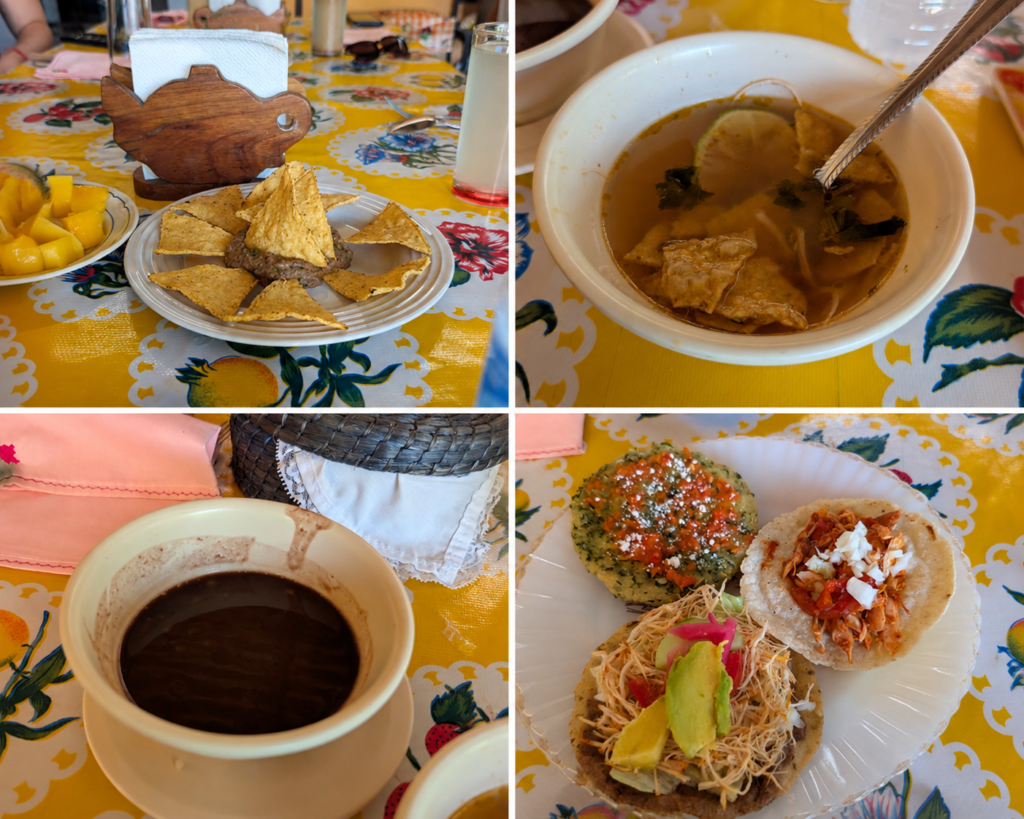
There is a wellness the whole industry keeps trying to bottle and sell back to us, and here it was, free, at a plastic table in the heat: food made by hands that don’t need your name to feed you, eaten slowly, with people who have nowhere else to be. My nervous system understood it before I did. I think that is what I keep chasing without admitting it, not the beautiful destination, but the moment a stranger hands you a warm plate and your whole body remembers how to exhale.
What the water asked me to slow down for
Two cenotes, one shared table, a colonial town going gold in the late light on the drive back. If you had asked me this morning what I needed, I couldn’t have told you. The day answered before I could get the question out.
This is the part I want to remember: intentional living isn’t always the beautiful ritual you build at home. Sometimes it is letting a place, its water, its people, its pace, take the wheel and set your rhythm for you. Today the Yucatán did that. I just had to be willing to climb down into the quiet and let it.
Want to experience the cenotes for yourself?
I booked this experience through Airbnb and spent the day exploring cenotes outside Mérida with a local guide.
→ View the Magic Cenotes Experience on Airbnb
Referral disclosure: I may receive a reward if you book an eligible Airbnb Experience through this link.