The Last Recipe Card in the Drawer
There is a drawer in my kitchen that I do not open often. Not because it sticks. Because of what is in it.
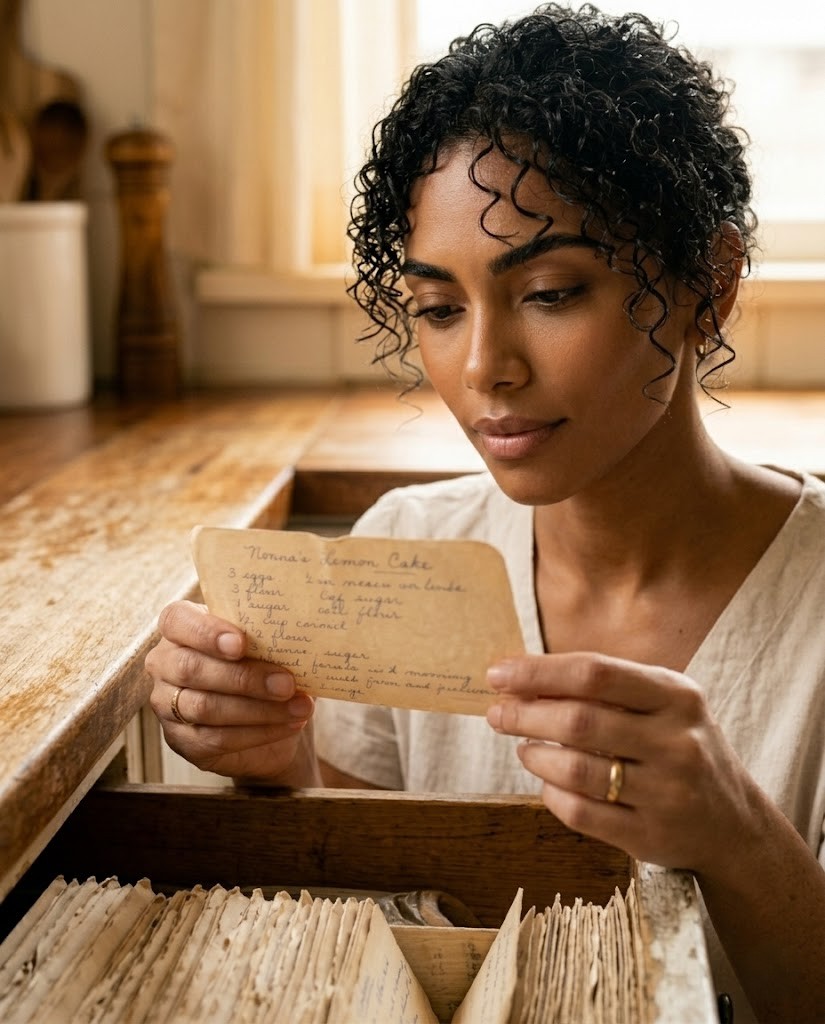
A stack of index cards, soft at the corners from years of handling, in two different hands. My grandmother’s, in the looping schoolgirl cursive she carried out of Jamaica and never lost. And behind hers, faded almost to nothing, my great-grandmother’s from the Mediterranean side, written in a language I cannot fully read but can somehow still follow, because the measurements are food, and food is its own language.
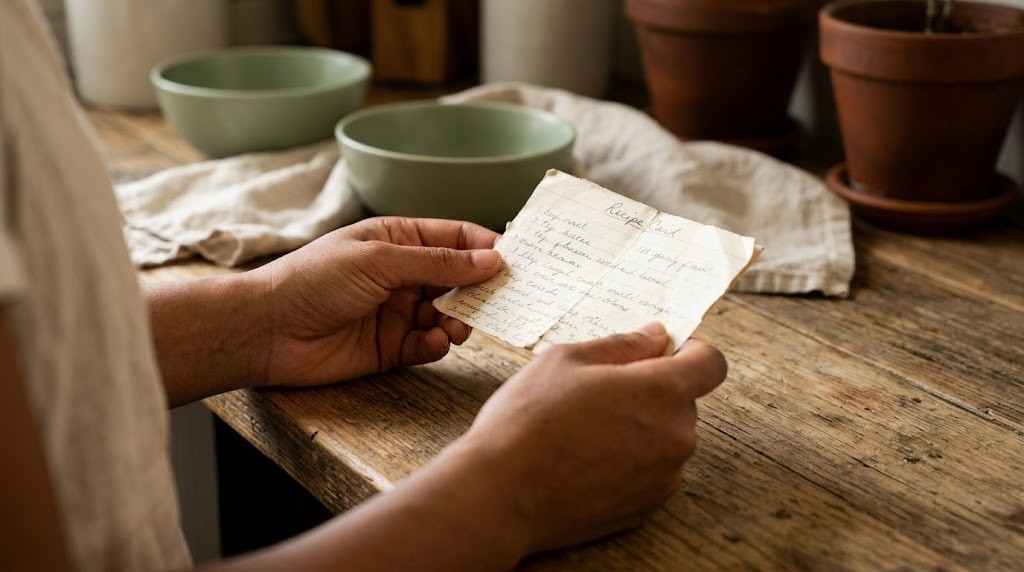
The last card my grandmother ever wrote is in there. I know it is the last because the handwriting had started to shake.
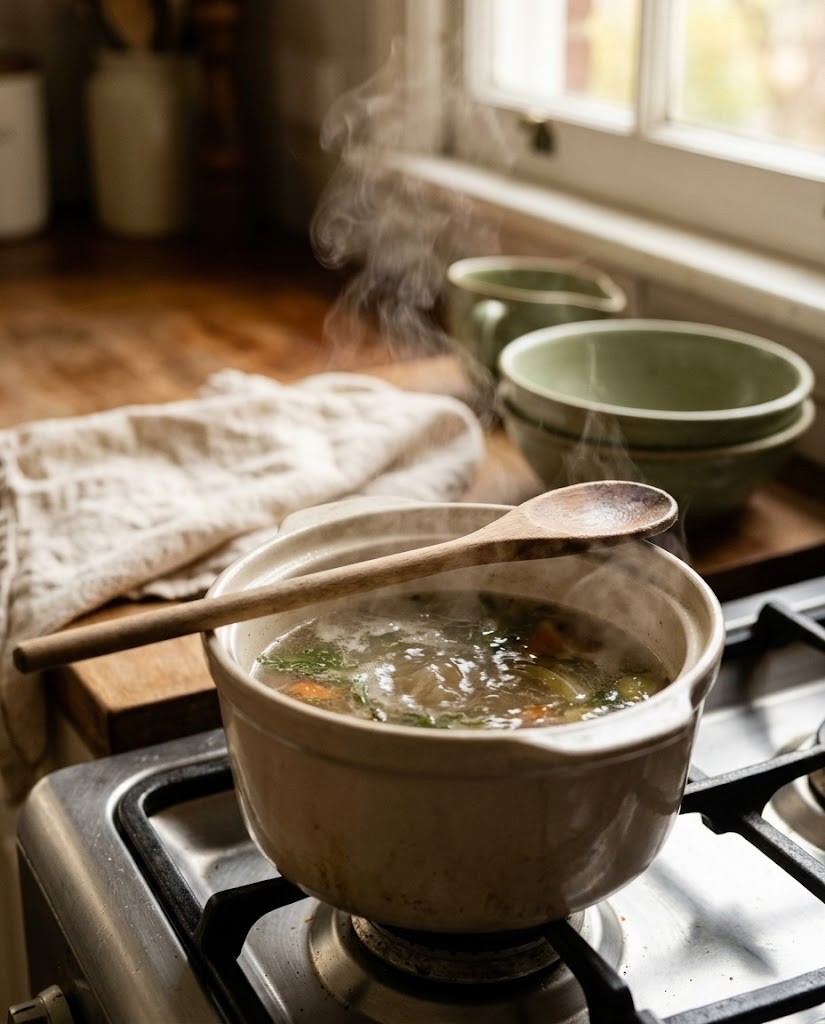
It is a recipe for something simple. That is the part that undoes me. Not a feast, not a holiday showpiece. A weekday pot of something brothy and warm, the kind of thing she made when someone was tired, or sad, or just home. And the card does not really tell you how to make it. It says a little salt. It says cook until it smells right. It assumes you stood next to her enough times to know what right smells like. It assumes she would always be there to ask.
This is the thing about a handwritten recipe. It is not instructions. It is a person, compressed. The shorthand, the smudge of turmeric in the corner, the one word underlined twice because it mattered. You are not reading a method. You are reading someone’s hands, someone’s certainty, their love folded into steps so it could outlive them.
I made it last week. I got it wrong the first time. Too much liquid, not enough patience. So I made it again. The second time, the kitchen filled with a smell I had not stood inside since I was small, and I had to sit down. That was not nostalgia. Nostalgia is soft and safe. This was sharper. It was her, in the room, for the length of a smell.
We think we inherit recipes. We do not. We inherit the people inside them. Every culture keeps its dead this way, in pots and in handwriting, in the dish that only tastes right when you make it the way you were shown. Long before we had words for grief or for comfort, we had a bowl we handed to the person who was hurting. That is older than almost anything. It might be the oldest kind of care we have.
If there is a card like this in your family, a recipe in a hand that is no longer here, do not leave it in the drawer. Make it. Make it badly the first time. Make it again until the kitchen tells you that you finally got it right. That is not just dinner. That is a conversation with someone you miss, in the one language that still reaches them.
I will keep the last card where it is, soft at the corners, in the drawer I do not open often. But I have started copying them all out, in my own hand. So that one day someone stands in a kitchen, reads cook until it smells right, and somehow, impossibly, knows exactly what I meant.