Fig Leaf Panna Cotta, and the Part of the Tree Nobody Uses
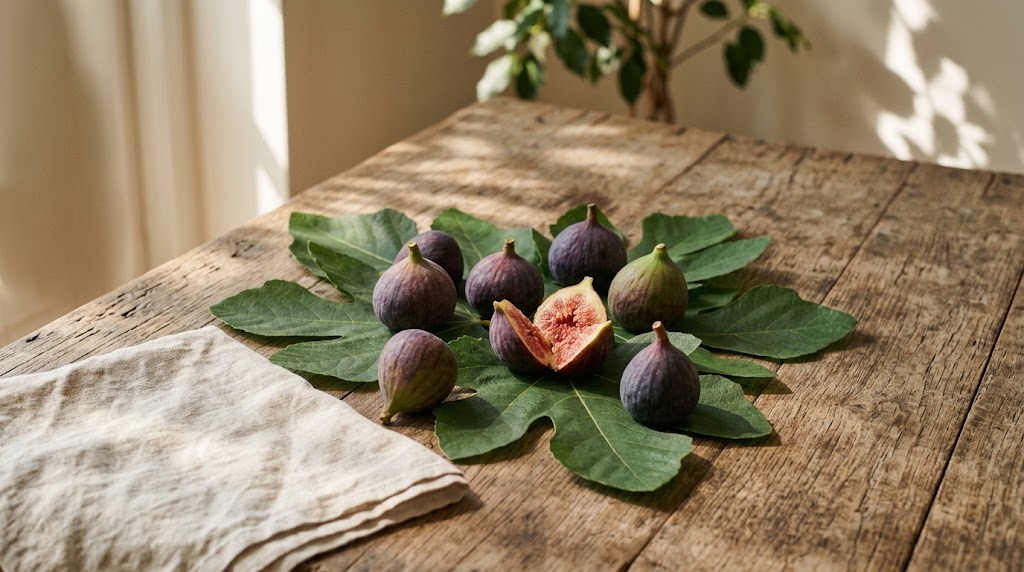
There is a fig tree behind the house that produces more than any two people could eat, and every September I give figs away like a woman trying to get rid of evidence. Neighbors see me coming and their faces do a small complicated thing.
For years I did what everyone does. I took the fruit and I left the tree alone. Then a chef I worked under in Florence, a man who was unkind in most respects and right about nearly everything, sent me out to the courtyard mid-service and told me to bring back leaves. Not figs. Leaves.
What a fig leaf actually tastes like
Nothing, if you eat it. They are tough and green and faintly unpleasant, which is why nobody bothers.
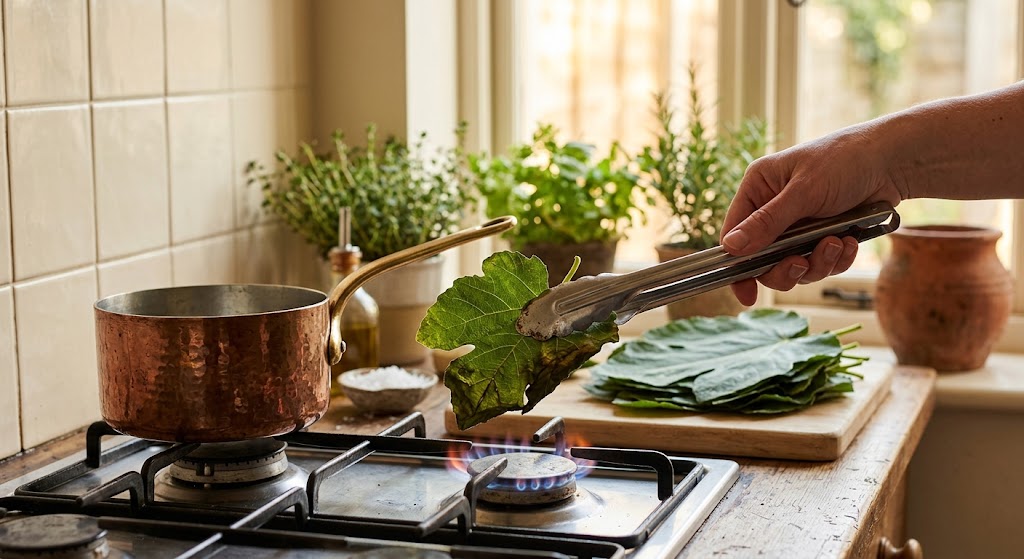
Warm one, though, and something else happens. Hold a fig leaf briefly over a flame until it goes limp and smells hot, and it releases an aroma that does not make immediate sense: coconut, green almond, a little vanilla, something like the smell of a fig without any of the sweetness. It is one of the strangest and best things I know about and it is sitting on a tree in half the gardens in this region, being ignored.
I have watched it stop conversation at a table. Somebody takes a spoonful and looks up and says what is that, and I say it is the leaf, and they do not believe me.
Why panna cotta and not something more impressive
Because panna cotta is cream and sugar and almost nothing else, and that is exactly the point.
When I was cooking professionally I would have built a plate around this. Three components, a tuile, something dehydrated. I would have hidden the leaf inside a technique and taken credit for the technique. It took me a long time and a fairly unpleasant departure from that world to understand that when you have one genuinely extraordinary flavor, the job is to get out of its way.
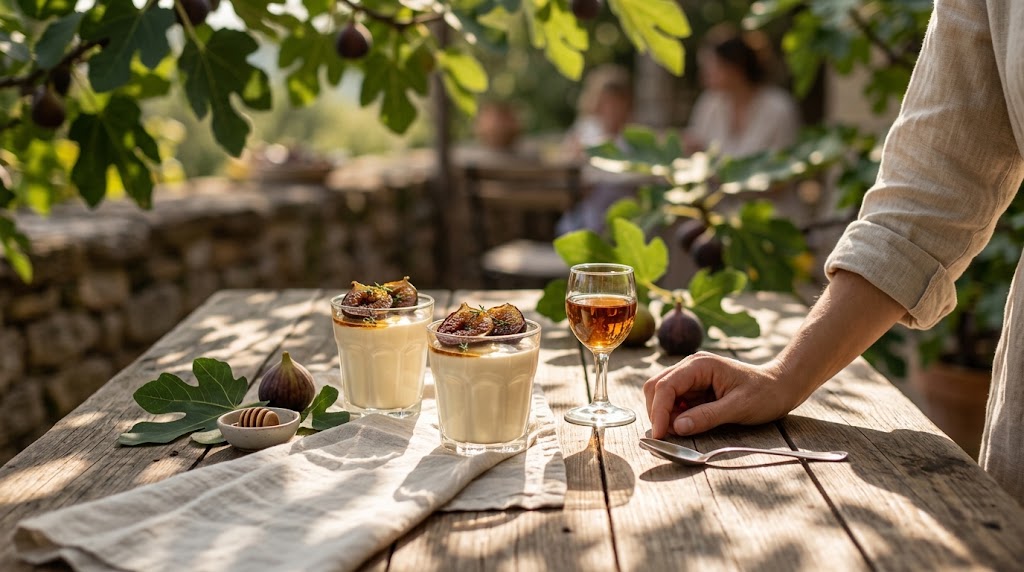
So: infused cream, set just barely, with figs roasted until they collapse. Nothing else on the plate. If you make this and someone asks what you did, the honest answer is that you soaked a leaf in cream, and you will feel slightly fraudulent accepting the compliment. Accept it anyway.
The set is the only place you can go wrong
Panna cotta has one failure mode and it is rubber. Too much gelatin and you have made a dessert that holds a knife mark, which nobody wants and which several restaurants I could name still serve.
You want it to barely stand up. It should tremble when the plate moves and it should collapse under a spoon with almost no resistance. Err on the side of too soft. A panna cotta that slumps a little is a pleasure. A firm one is a texture problem you have to eat your way through.
The other thing is patience with the infusion. Forty-five minutes off the heat, covered, and then taste it before you commit. Leaves vary. A young leaf from a well watered tree in a wet year gives you less than an older one at the end of a dry September. Adjust by taste rather than by clock, which is the only cooking advice I fully trust.
Fig leaves without a fig tree
You do not need to own one. Ask. Half the fig trees I know produce for nobody in particular and the people who have them are usually delighted that somebody wants the part they rake up.
Take young to middling leaves, green and pliable, not the leathery ones near the trunk. Rinse them properly. And handle the cut ends carefully, because fig sap is genuinely irritating on skin and worse in sunlight, which is not folklore, it is a real compound and it will give you a burn if you are careless in a bright garden. Wear gloves or wash your hands and do not touch your face.
That is the whole warning. Everything after it is cream.
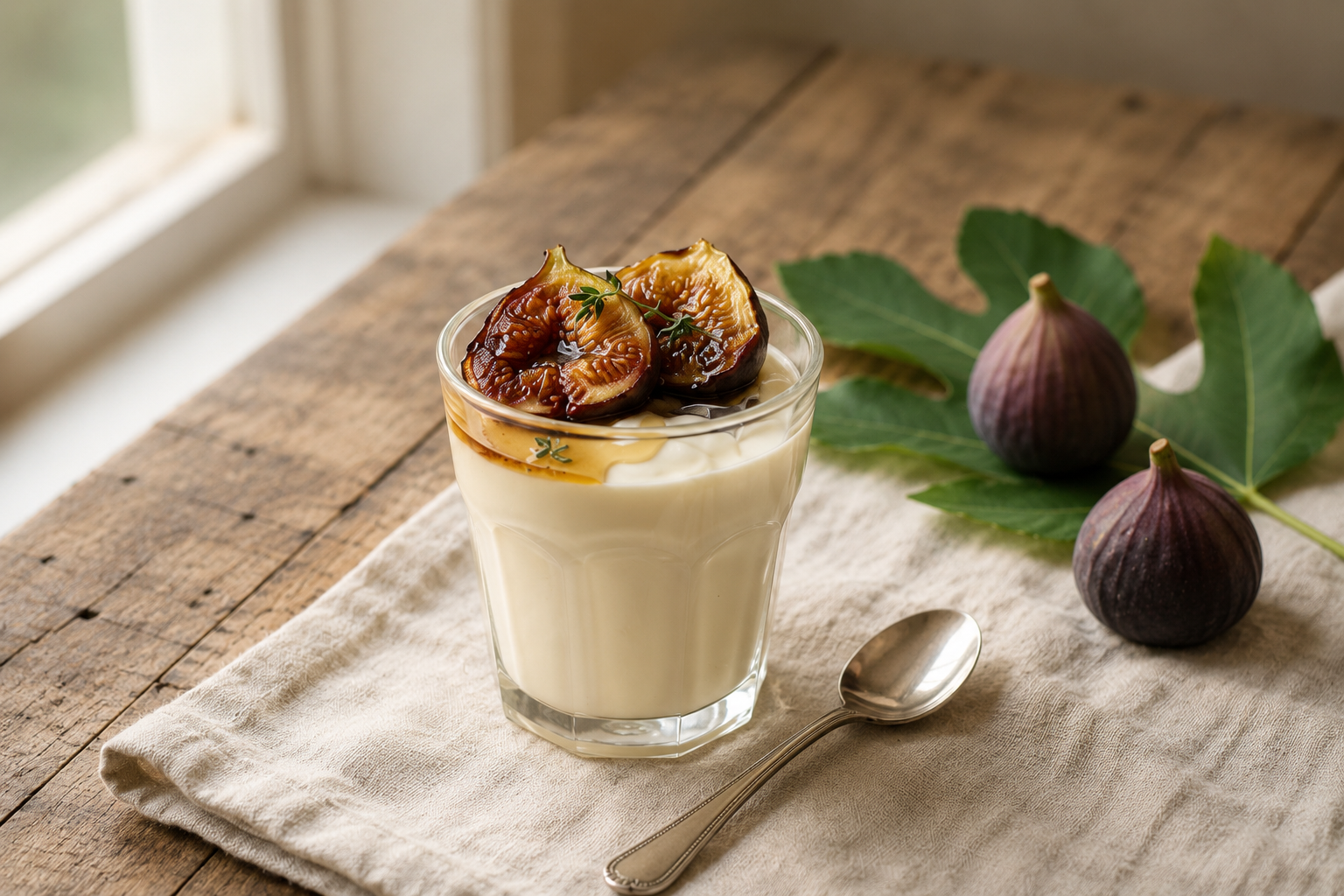
Fig Leaf Panna cotta with Roasted Figs
Ingredients
Equipment
Method
- Hold each fig leaf briefly over a gas flame, or press it into a dry hot pan for about 20 seconds a side, until it goes limp and smells hot and green. Do not let it blacken. This is where the aroma comes from and skipping it gives you a much duller result.
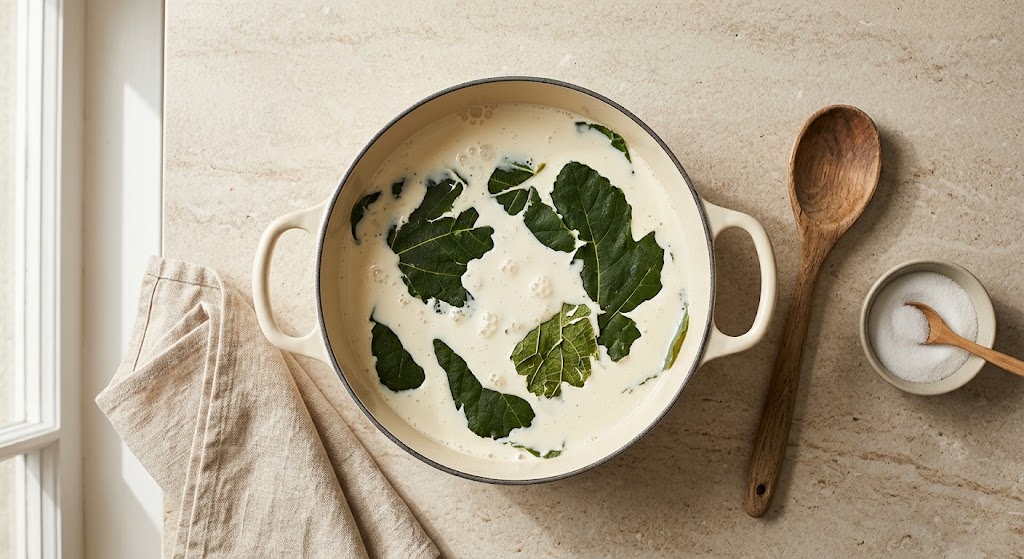
- Tear the warmed leaves roughly and put them in a saucepan with the cream, milk and sugar. Warm gently until the sugar dissolves and the surface just begins to steam. Do not boil.
- Take off the heat, cover, and infuse for 45 minutes. Then taste. It should smell distinctly of coconut and green almond. If it is faint, warm gently again and give it another 15 minutes.
- Soak the gelatin sheets in cold water for 5 minutes until soft, then squeeze out. If using powdered, sprinkle over 2 tbsp cold water and leave to bloom.
- Strain the cream through a fine sieve, pressing the leaves to get everything out, then discard them. Rewarm the cream gently until just hot to a fingertip, not simmering.
- Whisk in the gelatin and the salt until fully dissolved. Pour into six glasses or moulds.
- Chill at least 4 hours, ideally overnight. It should tremble, not hold a knife mark.
- Shortly before serving, toss the halved figs with the honey, olive oil, lemon peel and flaky salt. Roast at 200 C (400 F) for 12 to 15 minutes until slumped and sticky.
- Spoon the warm figs and their syrup over the cold panna cotta and serve straight away.
Notes
- Fig sap caution: the milky sap from cut leaves and stems is a skin irritant and is phototoxic, meaning a reaction can worsen in sunlight. Wear gloves or wash your hands well, and do not touch your face. Rinse the leaves before use. Once infused and strained the cream is completely fine.
- Use young to middling leaves, green and pliable. The leathery ones near the trunk are harsh.
- Err soft on the gelatin. A panna cotta that slumps is a pleasure. A firm one is a texture problem.
- Leaf strength varies with the tree, the season and the rainfall. Taste the infusion rather than trusting the clock.
- Make the panna cotta a day ahead. Roast the figs within the hour of serving so they are warm against the cold cream.
- No fig tree: ask a neighbour. Most fig trees produce for nobody and the owner will be glad someone wants the leaves.
- Dried fig leaves work at roughly half the quantity, but the result is flatter. Fresh is worth the ask.