What a Week of Real Tuscan Cooking Actually Costs in 2026
Elara Solari · Food and Home
Every few months, someone tells me, gently, that the way I eat must be expensive. Olive oil from a local mill, cheese with a name, and vegetables from the market instead of a plastic bag at the supermarket. It sounds like a life with a budget I do not have.
So I did the unromantic thing. For one ordinary week, not a special one, I kept every receipt and wrote down every euro. I cook almost all of my meals at home, which is the whole point of this. Here is what a real week actually cost me, and what it bought.
The week, itemized
This is one person, seven days, cooking three meals a day at home with a few leftovers carried forward. Prices are what I actually paid in my part of Tuscany this spring.
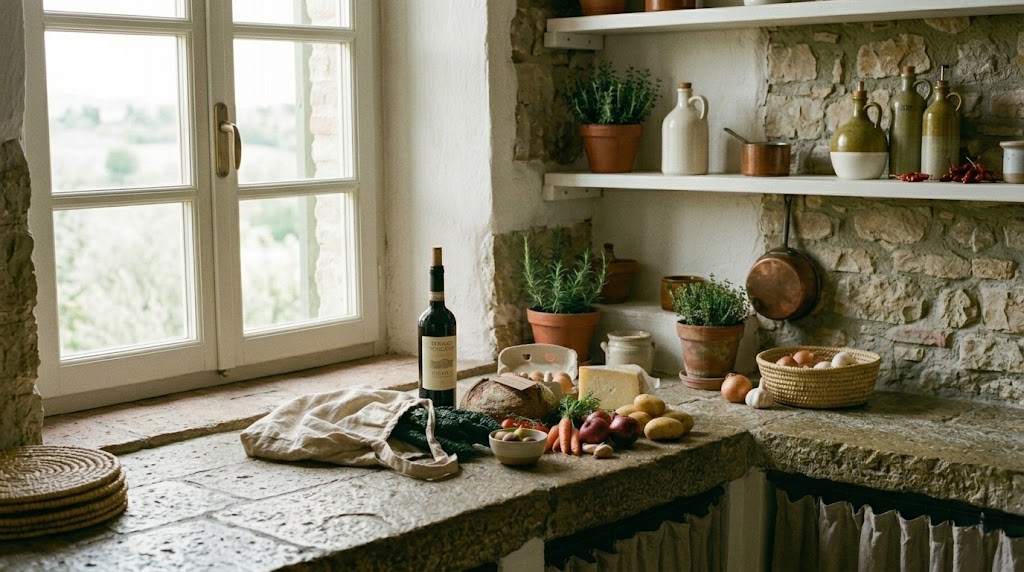
- Seasonal vegetables at the market (zucchini, tomatoes, a bunch of chard, onions, garlic, and fennel): about 11 euros for the week
- Eggs from a neighbor, a dozen: 3.50 euros
- Pane toscano, two loaves over the week: 7 euros
- Dried cannellini and borlotti beans: 4 euros, and this is the part people miss, because dried beans cost almost nothing and feed you for days
- Good dried pasta: 2 euros
- A wedge of Parmigiano, about 200 grams: 6 euros
- Anchovies in oil, one jar: 3 euros
- Coffee for the week, ground at home: about 4 euros
- A bottle of local wine: 6 euros
That comes to roughly 46 euros for the week. Add a few pantry things I did not buy this week because I already had them, and you land somewhere near 50 to 55 euros all in.
Now, two ingredients are not on that weekly list because I do not buy them weekly. My olive oil comes from a mill nearby in five-liter tins, and a tin runs me somewhere between 60 and 80 euros and lasts months. Spread across a week, the oil I actually use costs a few euros. The same is true of salt, vinegar, dried herbs, and the long-keeping things that make everything else taste like more than it costs.
What the numbers are really saying
When people imagine the cost of eating well, they picture the olive oil and the cheese, the things with provenance. But those are not where the money goes. A good tin of oil is an expense you pay four times a year and forget. The cheese is six euros and lasts ten days.
The money goes, almost always, to food you buy and do not cook. The bagged salad that turns to liquid in the drawer. The third coffee out. The dinner you were too tired to make, so it arrived in a paper bag for the price of four of the dinners above. I am not above any of this. I have stood in my own kitchen at nine at night and ordered food I had the ingredients to make. But when I track it honestly, the waste is never in the good ingredients. It is in the convenience I paid for and then did not use.
This lines up with something happening more broadly right now. More people are cooking at home again, partly because groceries have gotten expensive and eating out has gotten worse value, and the smartest version of that shift is not deprivation. It is the opposite. It is spending a little more on a few real things and then actually using them.
The cheap luxury most people skip
If you want your home cooking to taste like it cost more than it did, the move is not to buy more. It is to let a small number of good things do the heavy lifting.
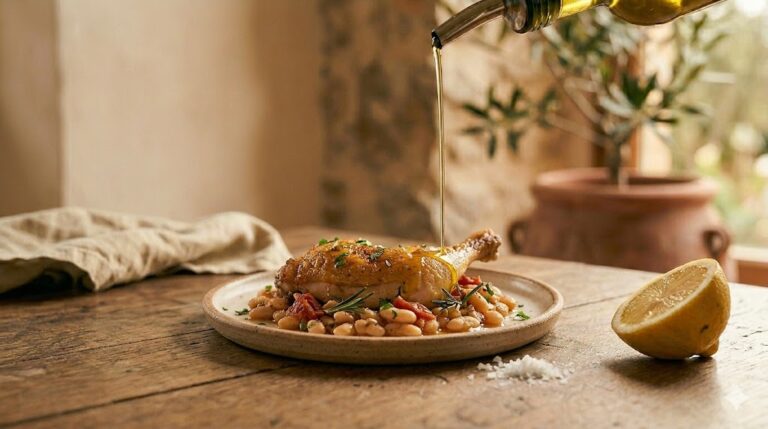
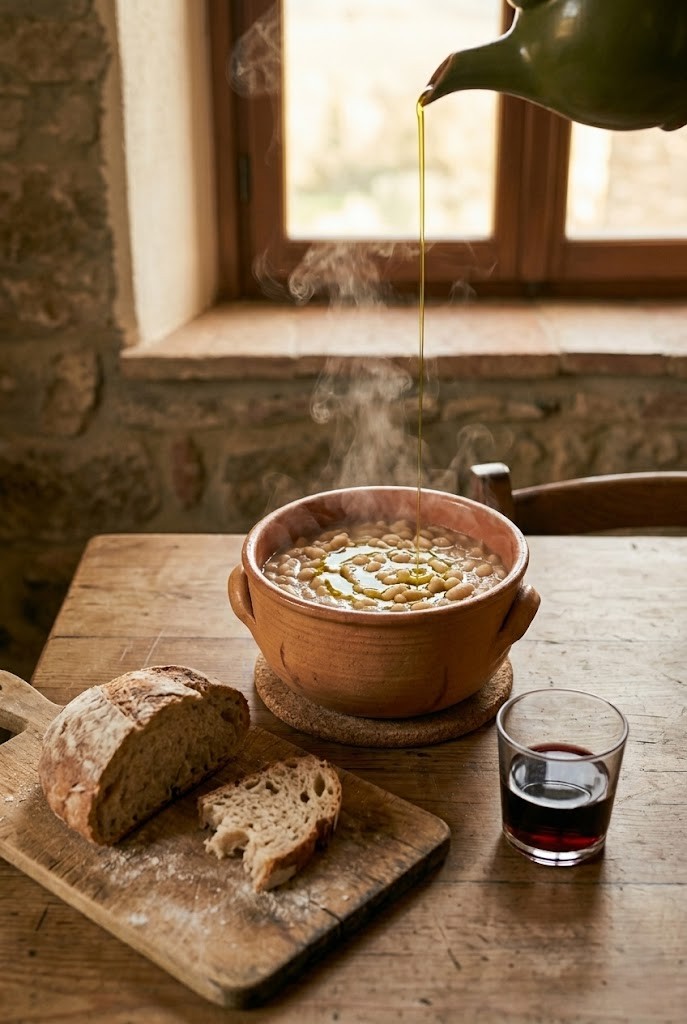
A pot of dried beans, cooked slowly with a glug of that good oil, a clove of garlic, and a sprig of whatever herb is alive in the garden, costs almost nothing and tastes like care. Bread, beans, a little cheese grated over the top, and a glass of the six-euro wine. That is dinner, and it is the kind of dinner people pay restaurants to imitate.
The expensive part of eating well is not the food. It is everything you buy to avoid cooking. The week above fed me beautifully for the price of two restaurant meals, and most of it I would have cooked anyway, because by now it is just how I live.
If you have been telling yourself that cooking the way you want to is out of reach, I would gently suggest keeping your own receipts for a week. Not to feel bad about them. Just to see, honestly, where the money is actually going. It is almost never where you think.