The Case for One Good Ingredient
What an Italian grandmother taught me about a kitchen with almost nothing in it.
By Elara Solari | Food | May 2026 | Estimated read: 5 minutes
The best meal I ate in my first month in Tuscany had four ingredients in it, and one of them was water.
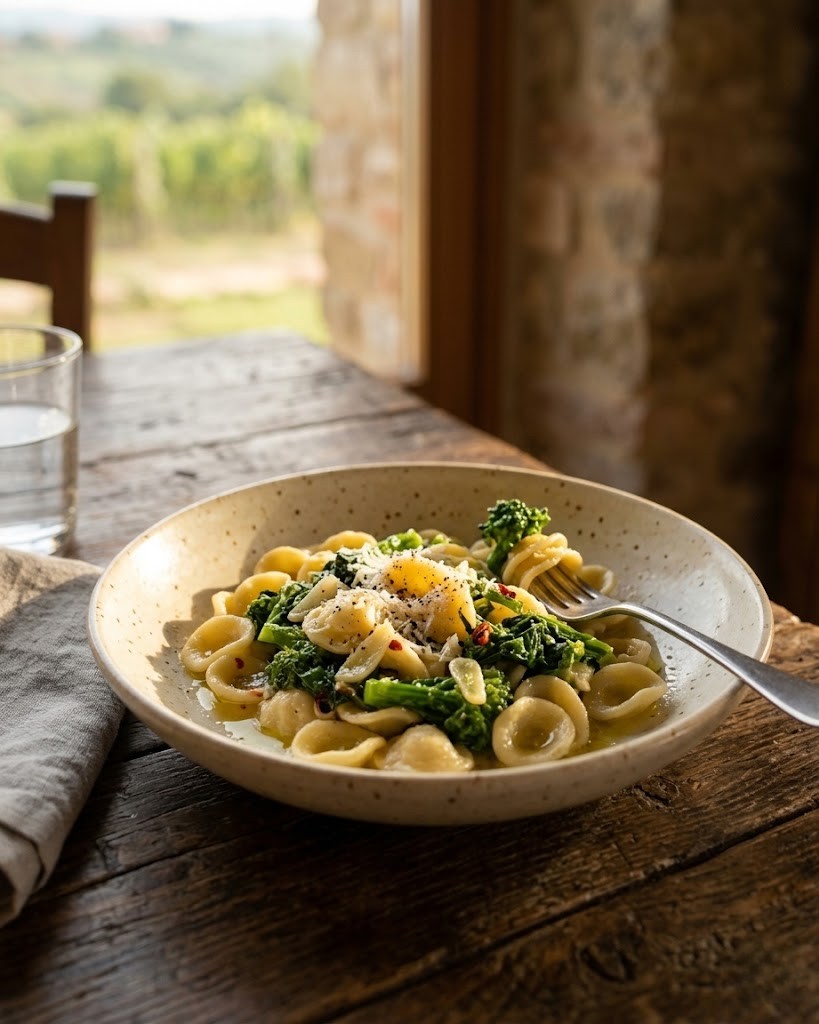
It was made by my landlady, who is seventy-eight and cooks the way other people breathe. Pasta, good olive oil, a little of the starchy water the pasta cooked in, and a handful of grated cheese. That is the entire dish. She made it in the time it took me to find a bowl. And it was better than things I have spent two hours and a full grocery run building.
I have thought about that bowl of pasta a great deal since. Not because it was complicated, but because it was the opposite, and the opposite is the harder thing to learn. I came to Italy as a trained cook with a pantry that could have supplied a small restaurant. She taught me, without ever meaning to, that most of what I owned was noise.
The maximalist kitchen is a kind of anxiety
I want to describe the pantry I used to keep, because I think many people who love to cook will recognize it: three kinds of vinegar. Five oils, four of them barely touched. Spice jars I bought for one recipe and never opened again. Specialty flours. Condiments from cuisines I cook twice a year. A drawer of gadgets, each purchased to solve a problem I had exactly once.
I told myself this was being prepared. It was actually a form of anxiety, dressed up as ambition. The overstocked pantry is the kitchen equivalent of buying clothes for the life you imagine instead of the one you live. It is an aspiration taking up shelf space. And it does not make you cook better. It makes you cook more nervously, surrounded by options, most of them slowly going stale while you reach for the same five things you always reach for.
My landlady’s pantry holds maybe fifteen ingredients. Good oil. Good salt. Pasta, rice, and flour. Tinned tomatoes and tinned fish. A few vegetables were bought that week, never more than she will use. She also drinks wine. Cheese from the same man she has bought cheese from for thirty years. That is it. And out of that, almost nothing comes, a different excellent meal every single night.
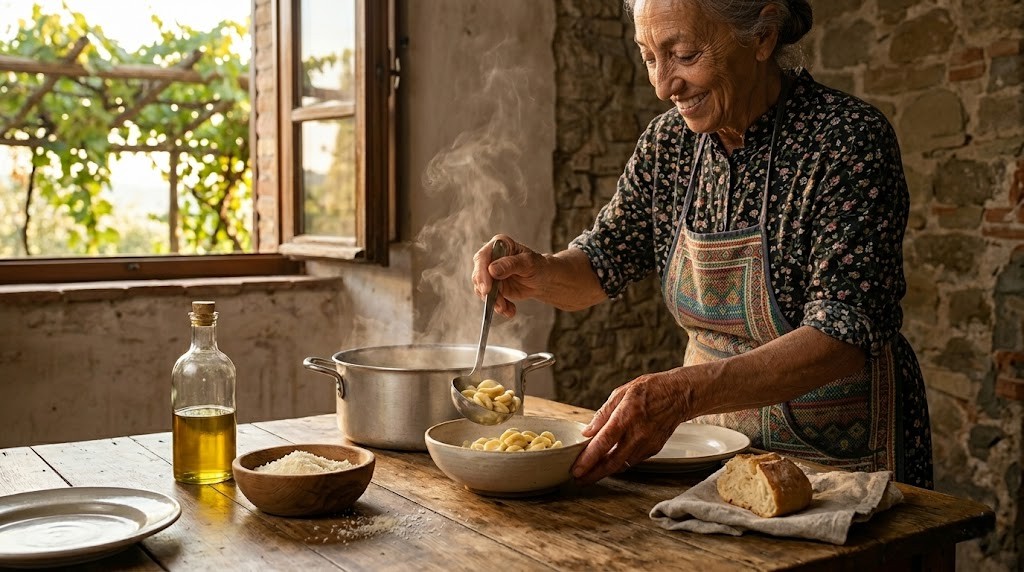
One good ingredient changes the whole dish
Here is the principle I actually want to give you, the one worth taking home: when you cook with very few things, the quality of each thing becomes the entire meal. There is nowhere to hide. A pasta with oil and cheese is only as good as the oil and the cheese. So you buy the good oil. You cannot afford to buy fifteen mediocre oils and one good one, but you can absolutely afford one good one if it is the only one you buy.
This is the part that the recipe-blog world gets backward. It tells you to assemble twenty ingredients into something impressive. The Italian kitchen, the real one, tells you to find four good ingredients and get out of their way. The skill is not an addition. The skill is restraint, plus the confidence to let a good tomato simply be a good tomato.
I started shopping differently. Instead of a big weekly haul of forty items, half of which would wilt or expire, I go to the market two or three times a week and buy a little. Whatever is best that day. A few perfect things instead of many adequate ones. I spend roughly the same money. I waste almost none of it. And the cooking got better, not despite having less, but because of it.
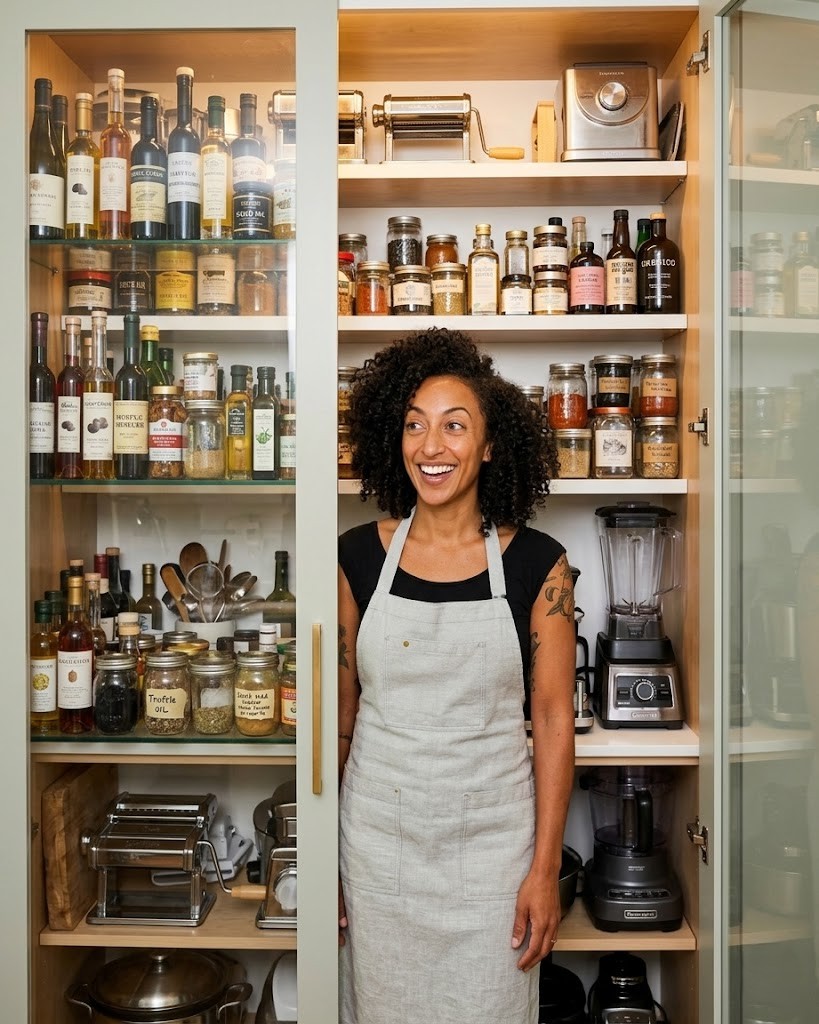
What this looks like on a Tuesday
Let me make this concrete, because principles are easy and Tuesdays are hard.
Tonight I will cook with: a head of broccoli that was the best-looking thing at the market this morning, garlic, the good oil, chili, the pasta, and the cooking water. I will cook the broccoli until it is much softer than an American kitchen would allow, almost a sauce. I will let the garlic and chili bloom in the oil. I will mix them with a little pasta water until it turns silky. That is dinner. Six ingredients, one of them water again, twenty-five minutes, and I will not want anything else.
The broccoli is the whole dish, so the broccoli had to be good. That is the entire philosophy. Spend your attention, and a little of your money, on the one ingredient that carries the plate. Let the rest be humble and let it be few.
There is a version of this that is about money, and a version that is about waste, and both are real and both matter. But the version I care about most is about attention. A kitchen with fifteen good things in it is a kitchen you can actually think inside of. You are not managing inventory. You are not staring into a full fridge feeling vaguely defeated. You have a few good ingredients and a hot pan, and the whole evening narrows down to one pleasant question: what do these four things want to become tonight?
That narrowing is the gift. It is the same thing, I have come to believe, that the slow life offers everywhere else. Fewer options, chosen well, leave you more present for the ones you kept. My landlady has been eating beautifully out of fifteen ingredients for half a century. She is not deprived. She is free. She is the least anxious cook I have ever stood next to, and she taught me everything by accident, over a bowl of pasta that took four minutes and contained almost nothing at all.
That is what I am building at Solari Table. Not more. Better, and less. One good ingredient, treated like it matters, because it does.
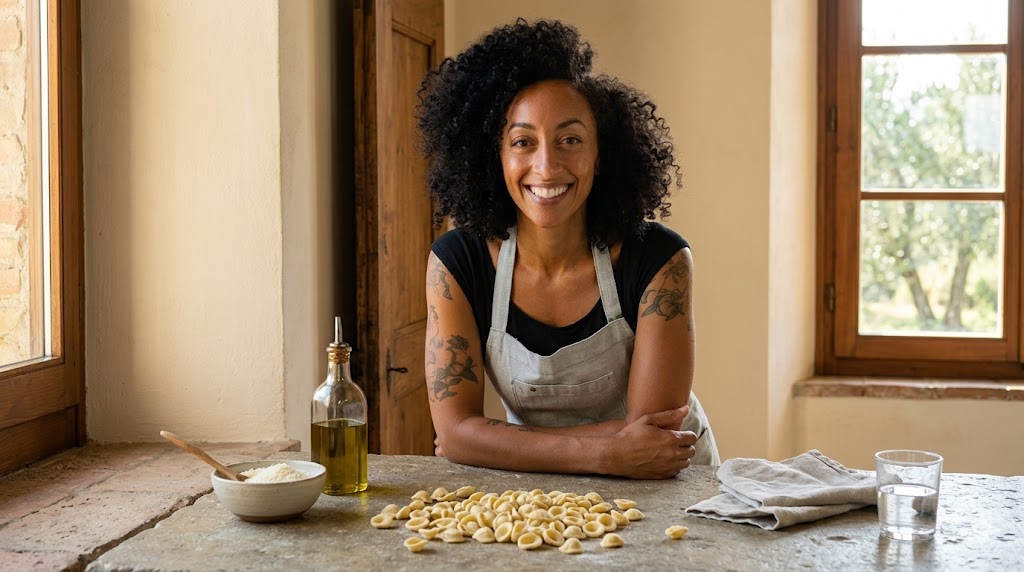
Elara Solari anchors Food at Wondrwell and is the founder of Solari Table. She writes and cooks from Tuscany, Italy.