Why I Traded a Michelin Kitchen for a Linen Apron
Elara Solari · Food and Home
For six years, I cooked food that no one ever ate.
That sounds dramatic, so let me be specific, because specific is the only honest way to tell this. I worked the line in Milan, in kitchens with stars next to their names, in rooms with no windows and no clocks. The shifts were fourteen hours on a slow day and sixteen on a normal one. The food was beautiful. I plated things with tweezers. I wiped the rims of plates with a cloth dampened in a precise way, and then those plates went through a door I was not allowed to walk through, to people I never met, and I went back to the pass and did it again.
I was good at it. That is the part that took me longest to admit, because it would have been easier to leave if I had been bad. I was not bad. I was rising. And I was, quietly and totally, miserable.
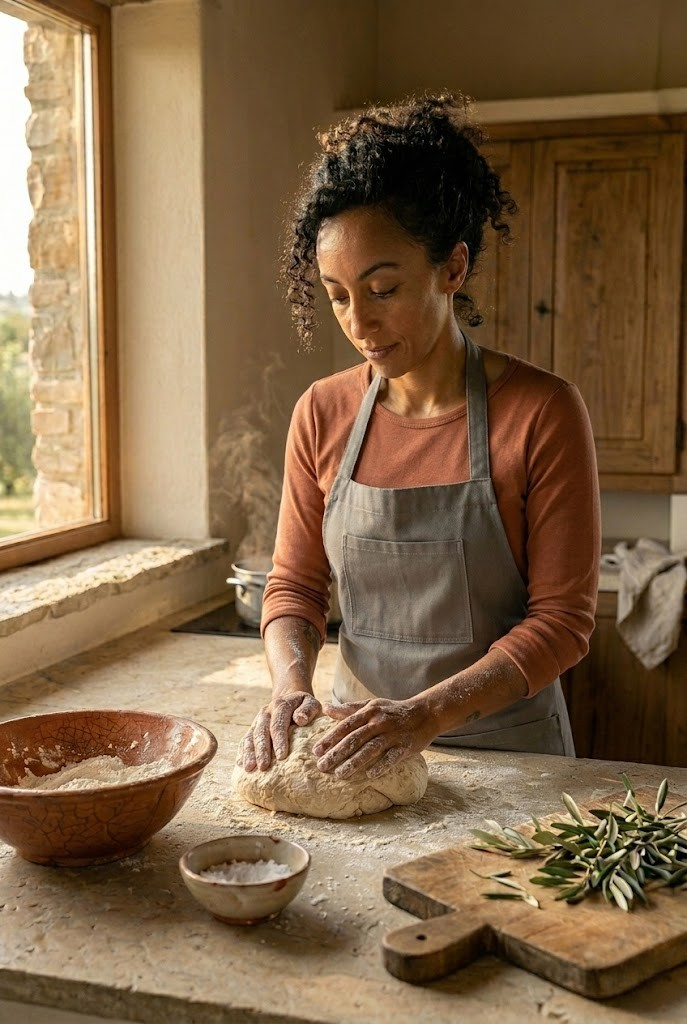
I grew up Brazilian and Italian, which means I grew up in kitchens where food was loud. It was love, and it was an argument, and it was my grandmother putting a spoon to your mouth before you could say no. Food was never about perfection in my family. It was about the table being full and the night running long. Somewhere in those windowless years in Milan, that version of cooking got crushed under the other one, the one measured in consistency and in the angle of a sauce.
The thing that stopped me was small. A minor injury, the kind that heals on its own, except it forced me to stand still for a few weeks for the first time in years. And in that stillness, I had the thought I had been outrunning. I did not want to cook for critics. I wanted to cook for people I could see eating.
So I went back to Tuscany, to my family’s roots, and I traded the white coat for a linen apron, and I started over.
What a slower kitchen actually looks like
I will not pretend the first year was romantic. It was quiet in a way that was sometimes lonely, and money was thinner than it had been, and I had to relearn how to cook for pleasure after years of cooking for inspection. But here is what changed, and it changed almost immediately.
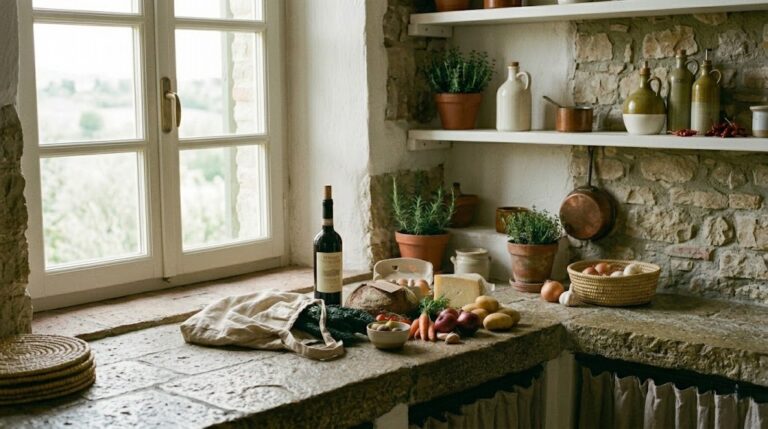
My mornings are slow now, on purpose. Espresso first, standing up, before anything. Then the market, or the garden, depending on the season and the day. I prep before noon, when the light is good, and the house is cool. I cook with what is in season and what is already in the kitchen, which sounds like a constraint and turns out to be a relief. When the ingredient decides the meal, you stop staring into the refrigerator, asking it to make a decision you should have made at the market.
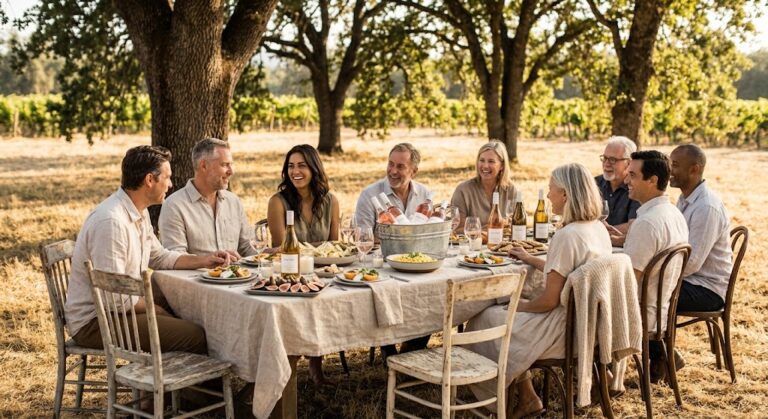
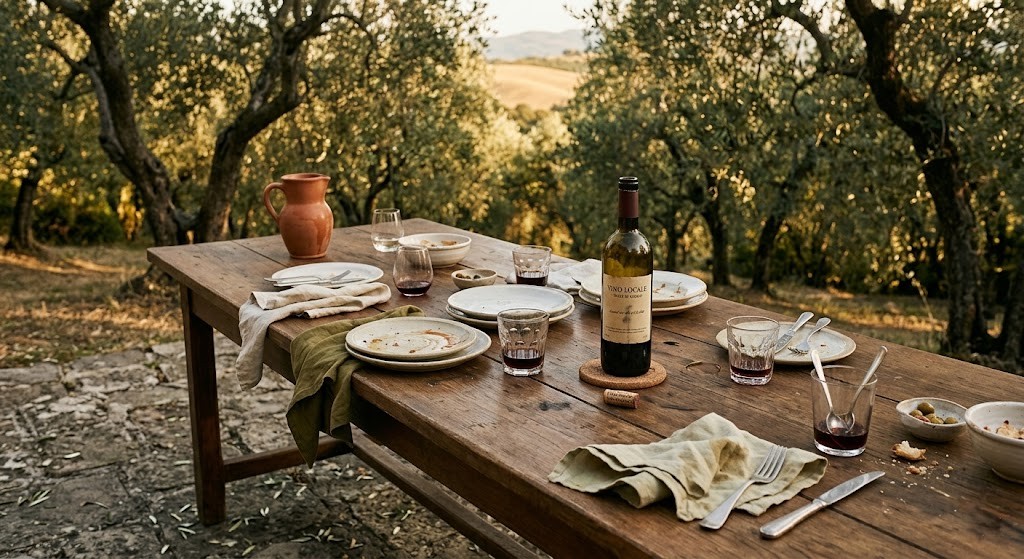
I host small dinners now. Real ones, at a real table, under olive trees that are older than me. They last for hours, the way the dinners of my childhood lasted, and nobody photographs the plate before they eat it. I am not against beautiful food. I spent six years making it. I am against food that exists to be looked at and not tasted.
I believe, and I will probably say this more than once in this section of Wondrwell, that a meal is the smallest form of self-respect. Not a grand one. A small one. The decision to feed yourself something real on a Tuesday, when no one is watching, and there is no occasion, is a quiet vote for the kind of life you want.
Build your own table
There is a woman some of you already know, our editor, who stayed at my farmhouse a couple of years ago while she was still untangling herself from a corporate life she had outgrown. We drank too much local wine one night and talked about the same fear, the one nobody names out loud: the fear of leaving something that appears to be success. I told her something I had told myself in my recovery, half advice and half instruction. Build your own table. Stop waiting to be seated at someone else’s.
She built hers. You can read about it in her work. I am, in a way, building this section of mine here with you.
What this part of Wondrwell will be
This is the food and home territory, and I want to be clear about what it is and what it is not.
It is not a list of fifteen recipes to try this weekend. It is not aspiration-plated and lit. It is the actual practice of cooking and keeping a home in a way that returns something to you instead of taking from you. It will have real recipes, yes, but it will also have the unglamorous parts: what a week of groceries actually costs, what to make when you are tired and a little sad and standing in your kitchen at nine at night, how to set up a kitchen that makes you want to use it.
I am the oldest of this group, the one the others call when something has gone wrong or gone right, and I will write here the way I cook. Warm. Unhurried. Honest about the cost.
Pull up a chair. Most of what I make is better the longer you stay.